


With the mid-terms looming and Texas potentially poised for a seismic shift back to being a Democratic state, the issue of immigration, migration and global displacement is one of the hotbed issues – but not the way many might think. Anjum Malik, Executive Director of the NGO Global Impact Initiative and long-time Austin resident, explains why helping refugee families achieve stability is both a humanitarian responsibility and an investment in the future of Texas.
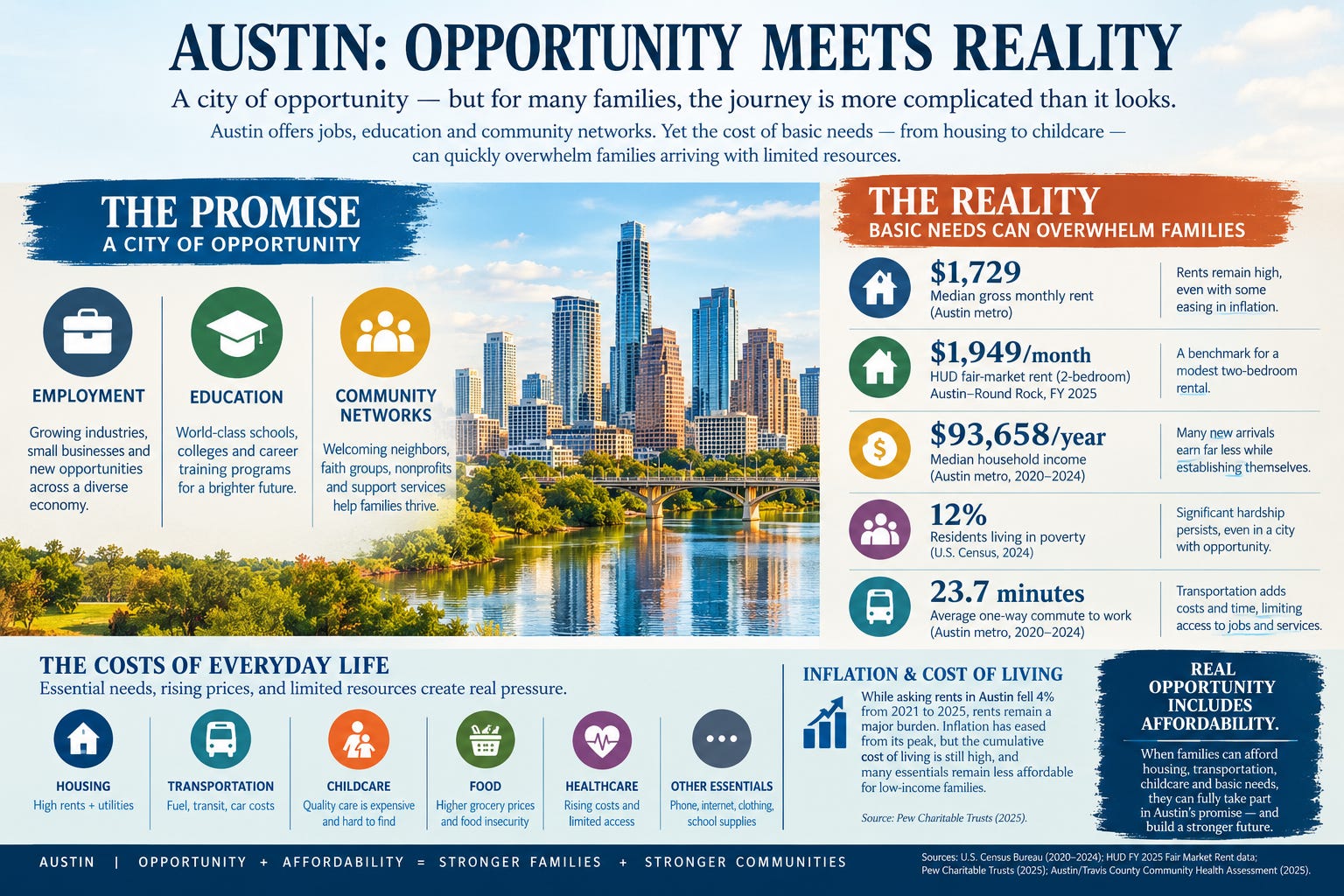
Austin has long promoted itself as a city of opportunity—a center of technology, education, entrepreneurship, and economic growth. But behind that success lies an increasingly difficult question: Who can afford to build a life here?
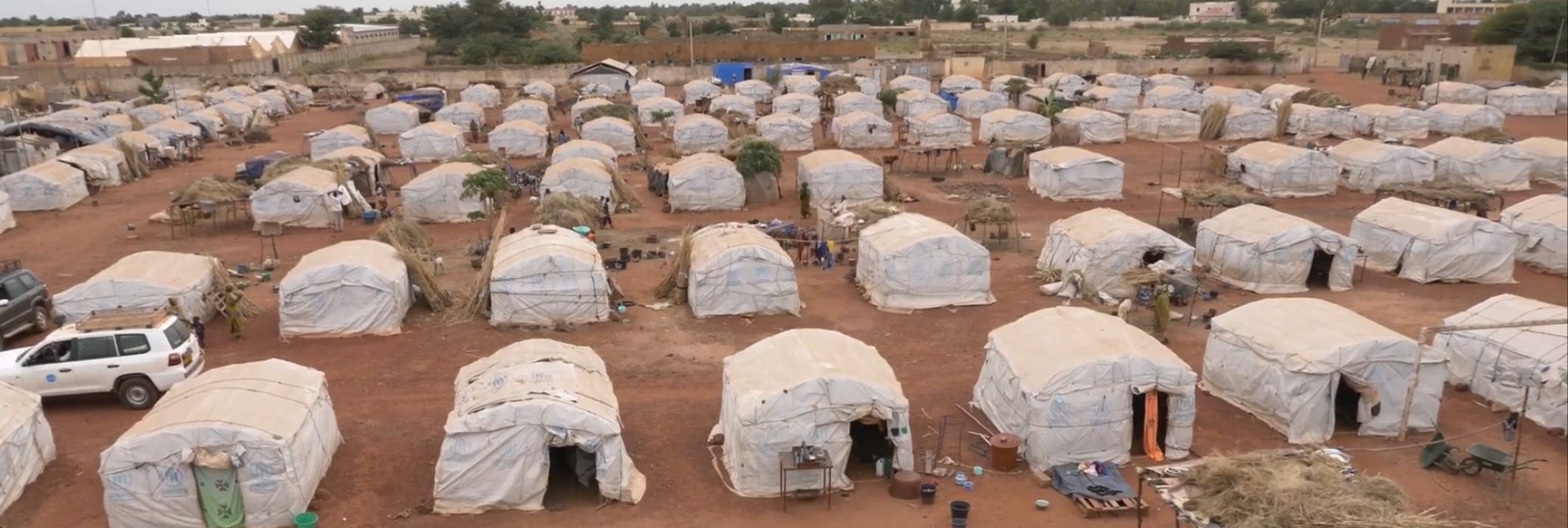
For refugee families arriving in Texas, the challenge is particularly acute. Many have fled persecution, conflict, or human trafficking, enduring years of uncertainty before reaching the United States. Some have chosen the states they have ended up in, while others have not. But all of them arrive ready, willing and able to work and adapt to their new life.
Malik stresses the importance of recognizing that for many their search for a new home begins long before they ever come to the United States. “For a typical refugee, the journey could start in Afghanistan, followed by Pakistan, Albania, Greece or various parts of the Middle East, Abu Dhabi, Dubai, or what have you. So, it could be a year or two years between the time they have left their home and then come to whatever their new home is going to be.”
The Austin Paradox
The sense of that journey weighs heavy on one’s conscience, especially as a parent. They arrive expecting to find employment, learn a language, navigate unfamiliar bureaucracies and tied to the programs that in theory are there to help them and their families get on their feet. And, perhaps one of the hardest things of all, find a place to live in cities such as Austin that face rising costs of housing, food, transportation, and childcare.
Compounding these challenges is the politically-charged public-policy landscape. Federal funding disruptions have placed pressure on refugee-serving organizations. Last month, the Administration leveraged a highly controversial “pocket rescission” maneuver by which the White House let the congressionally approved $567 million earmarked for the Office of Refugee Resettlement expire right before the end of the fiscal year. Officials argued that the agency was overfunded due to a drop in border crossings despite the fact that the bulk of these funds serve the population that is already in the country enabling them to rebuild their lives and achieve economic self-sufficiency.
The budget cuts have deeply hurt local humanitarian organizations such as Global Impact Initiative, which helps refugee families find employment, supports children’s adjustment to school, and develops women’s entrepreneurial skills. But to make matters more dire, Texas leaders have imposed even deeper reductions in the next budget cycle. One of the cities to be hardest hit is Austin.
A Hand Up Not A Hand Out
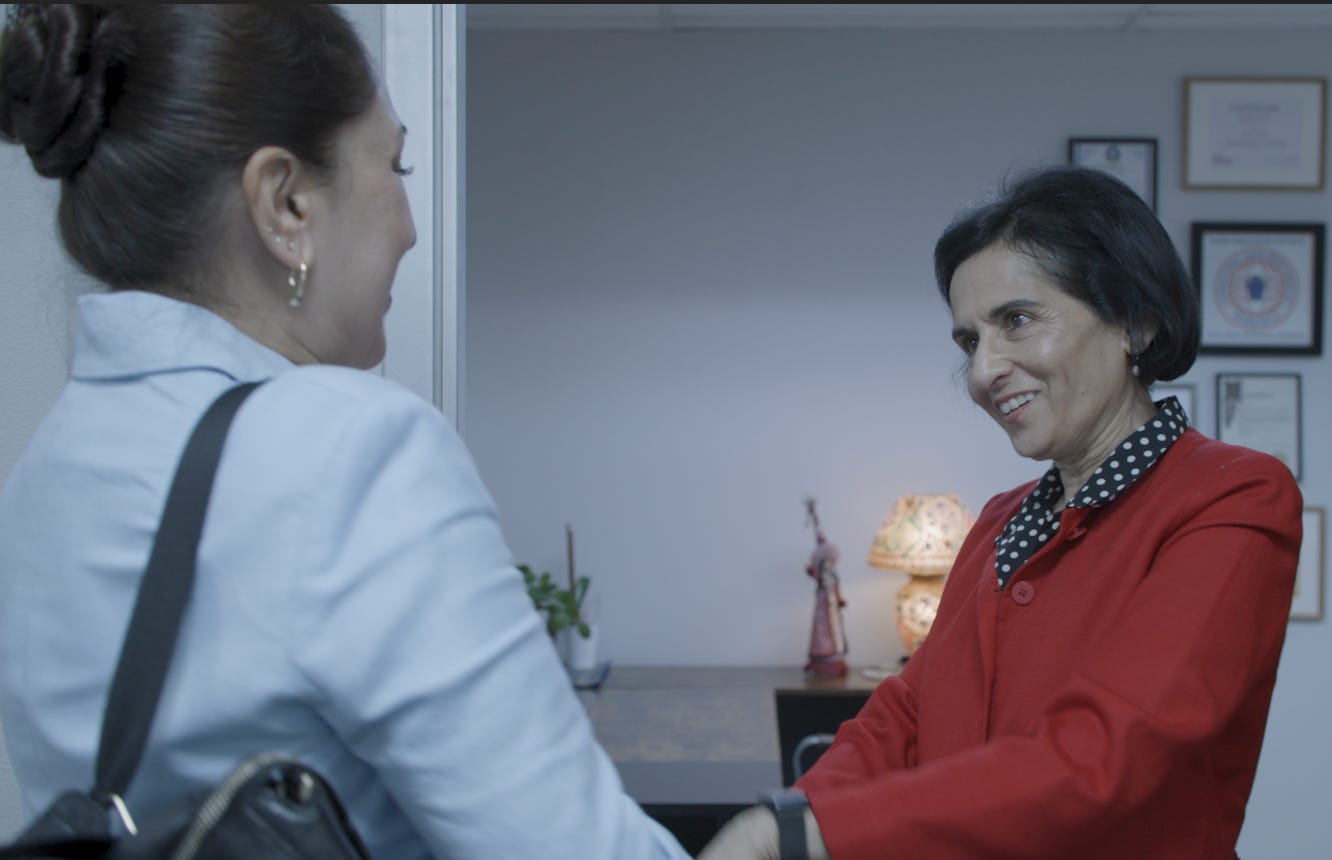
Few people are better positioned to address the challenges of “new neighbors” than Malik, for she brings a personal perspective of belonging. Born in Dehradun, India, she immigrated to the United States in 1977, choosing to settle in Austin. Nearly five decades later, she has witnessed the generosity of its residents and the barriers that can prevent newcomers from participating fully in the community they now call home. She also understands first hand that Texas not only represents all our country offers within the American dream, it also has one of the nation’s largest immigrant populations and is a major destination for refugees.
Austin in particular offers the promise of employment, education, and community networks. Yet the city’s economic opportunities coexist with a difficult reality: meeting housing, transportation, childcare, and other basic needs can quickly overwhelm families arriving with limited resources. “It’s a city whose cost of living continues to challenge even longtime residents,” says Malik.
Gii emerged in 2020, during the COVID-19 pandemic, when economic insecurity and social isolation exposed the vulnerability of already underserved communities. Malik framed the challenge in a question that continues to guide the organization: “Could dignity, access, opportunity survive?”
Gii is serving new neighbors from eleven countries. “At one time, they were predominantly from Afghanistan.” That’s because they were the overwhelming number of war refugees already there when Malik and her board founded the organization. “Many of these, especially the Afghan refugees who were working for the allied forces, had a very stable life,” Malik explains. “They were paid in U.S. dollars. And when you saw their homes, they were living well and had a set life, surrounded by family, friends and community,” she adds. “And then to leave everything you’ve ever known and your support system and move to a new country, a new culture, learn a new language when you haven’t even gone to formal school. It’s very hard, cruel and dehumanizing in many ways.”
For refugees, the path toward stability is rarely straightforward. Professional experience and educational credentials may not translate easily into the local job market. English proficiency can be a barrier. Parents must learn unfamiliar systems while helping their children adjust to school, often with little extended family nearby.
For women, the challenges can be especially acute. Some arrive with limited formal education or illiterate. Others have never worked outside the home or managed their own finances. Even when a family member finds employment, one income may not be enough to sustain a household in Austin.
In examining Gii’s programs, one quickly understands that it is the attention to the smallest yet simplest of basic life needs that the grander solution of acclamation for the refugee exists. The organization’s Refugee Stabilization and Integration Programs provides online and on-site tutoring, ESL training, job and trade readiness mentoring, and support for displaced individuals.
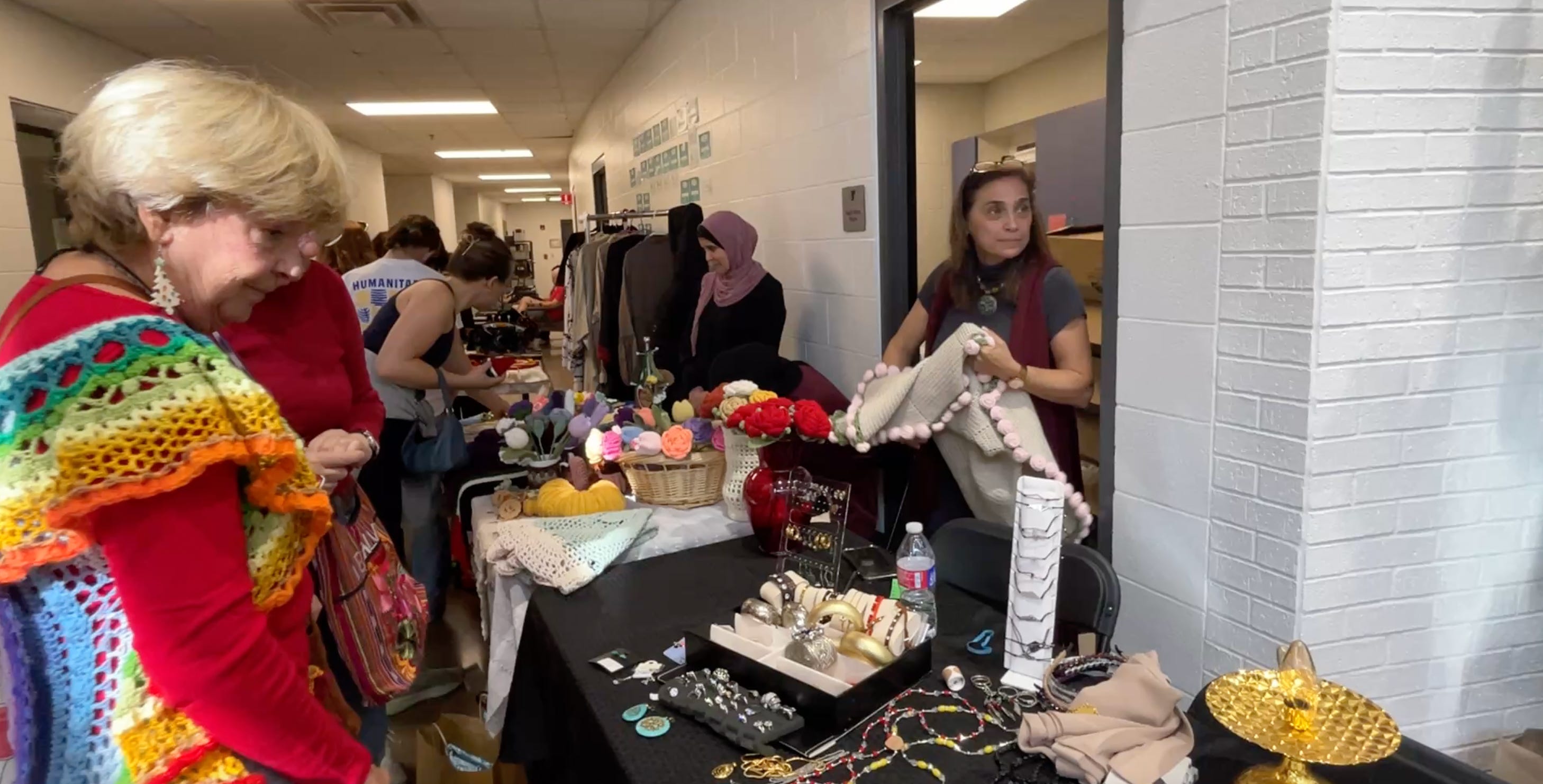
It leverages resources in the greater Austin area and uses partnerships such as the NextGen AI/STEM & Mentoring Program and their educational enrichment and youth mentoring. Through their partnership with the Greater Austin YMCA they have created regular craft bazaars where artisans from other parts of the world can come together and sell their unique wares. “For many of the women, who never had formal work and in some cases never made money of their own, this is empowering,” said Sean Doles, Public Affairs Officer at Greater Austin YMCA.
Perhaps most poignant is the organization’s sewing circle. It brings together a predominantly Muslim group of mothers and daughters and an all volunteer work force coming mostly from Shalom Austin, a hub of Jewish life in Central Texas. Through sewing machines donated by Jo Ellen Peterman and fabrics donated by a variety of churches and businesses, participants combine their traditional practices with the commercial ones they are learning. In fact, the machines were so new that many of the Afghani women had to be retrained because they were used to old foot pedal ones that are now decades old here.
All of this illustrates Malik’s perseverance and infectious optimism, even in the harsh economic financial realities and with anti-immigrant rhetoric that manifests itself regionally and nationally. The answer, she believes, depends on whether communities are willing to move beyond welcoming newcomers in principle and invest in practical support that makes a fresh start possible.
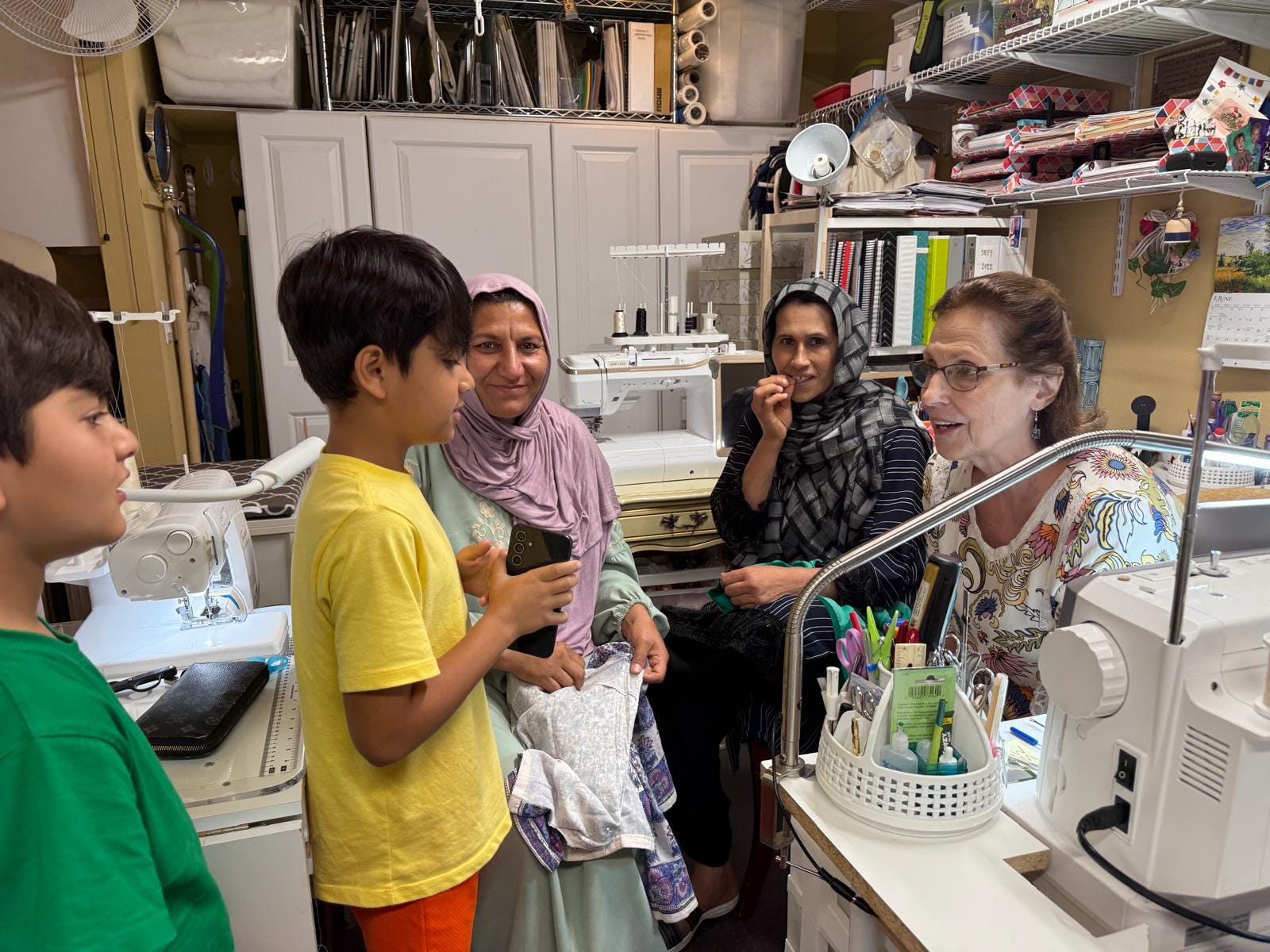
Malik believes economic independence is essential to lasting integration. Employment assistance, entrepreneurship, and practical guidance are not simply services that help a family get through its first few months. They can determine whether that family has the foundation to remain stable over time. Gii’s work includes helping refugees prepare for employment, supporting women who want to create businesses, and assisting parents as their children adjust to American schools. The goal is not merely to help people survive their transition but to equip them with tools to participate fully in their new community.
When Funding Decisions Reach Local Families
That work is taking place amid changes in federal refugee policy and growing uncertainty about public funding. In January 2025, the federal government suspended some refugee resettlement funding, disrupting the work of organizations that help newcomers establish themselves. The Administration subsequently set a refugee admissions ceiling of 17,500 for fiscal year 2026, down from 125,000 for fiscal year 2025.
Meanwhile, in 2026, Texas officials directed agencies and other public institutions to prepare for 3% spending reductions in their 2027–29 budgets. The directive does not mean that every agency program has already been cut, but it adds uncertainty for organizations and communities that depend on public resources.
For local service providers, changes in funding and eligibility can have consequences well beyond a budget line. When assistance becomes harder to access, families may turn to nonprofits for help with employment, food, school adjustment, and other needs—often at the very moment those organizations face greater pressure to stretch limited resources.
The result is a growing need to make every dollar—and every partnership—count. For Gii, that means combining practical services with community engagement, encouraging local giving, and building relationships that can sustain support when formal systems fall short.
Small Contributions, Lasting Impact
Malik emphasizes the role that ordinary people can play in refugee integration. Gii’s average individual donation, she has said, is about $15, a modest contribution that demonstrates how support can come from people unable to make large gifts.
Small donations, volunteer work, professional expertise, and community partnerships can help sustain services that make a tangible difference in people’s lives.
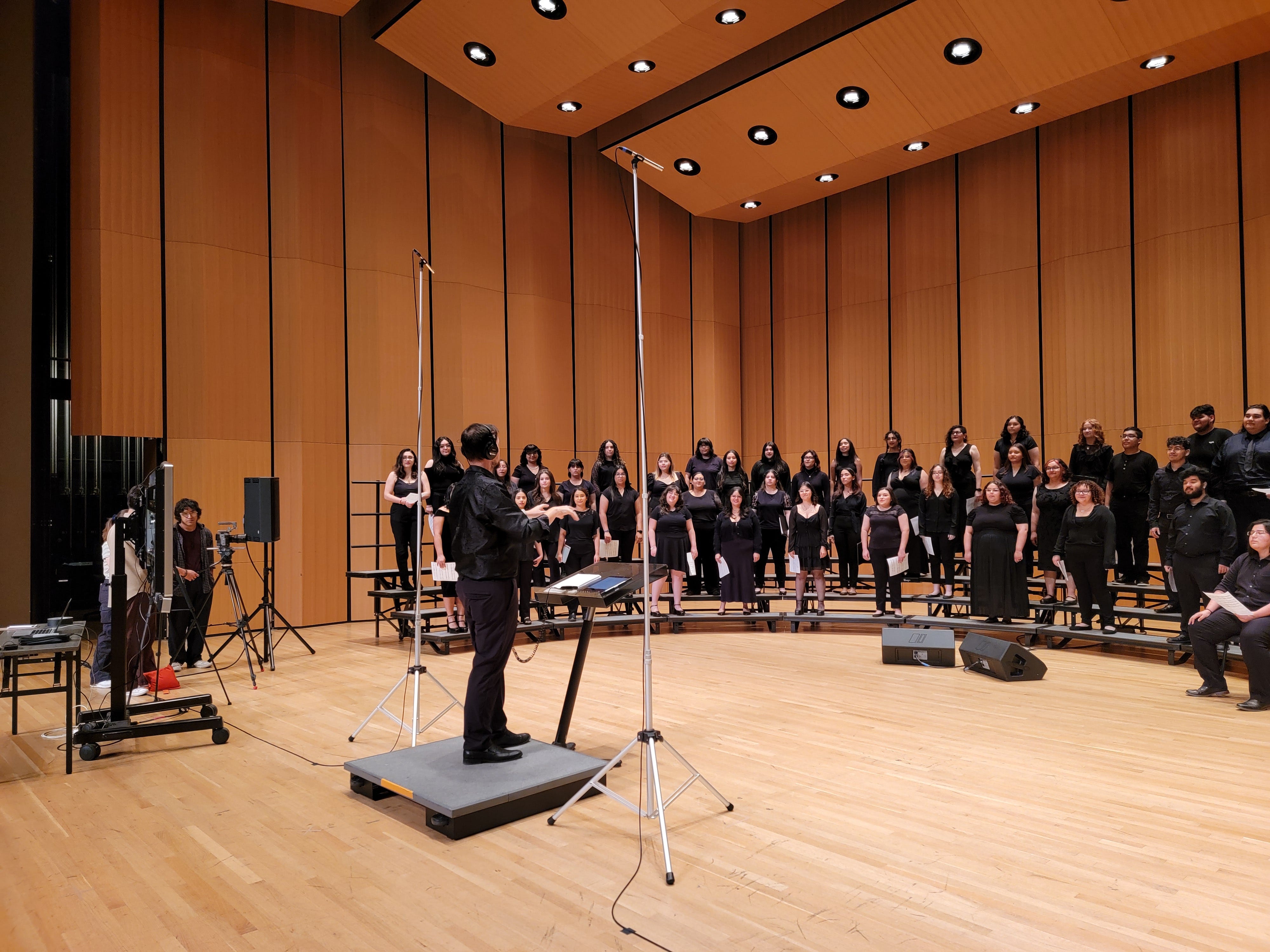
Creative initiatives can extend that reach. The “We All Stand Together” song and campaign, for example, present a way to bring people together around the experiences of displaced children, using music and storytelling to raise awareness and encourage participation. Such efforts can help audiences connect emotionally with an issue that might otherwise seem distant, while providing another avenue for community engagement and fundraising.
Children who have been displaced may be expected to adapt quickly once they enter an American classroom. But arriving at school does not mean the trauma of leaving home has disappeared. “Oh, my goodness. They may say little, but you can read it on their faces,” says an ever empathetic Malik. “It’s written in their eyes and it speaks volumes. They hear the uncertainty, the fear, the anguish that their parents express at home although they may not verbalize it.”
She and her staff take pride in the change they see that they and their programs have on the youngest of their constituents as they begin to open up. “After months, they start expressing [the trauma] in some ways, either through their behavior or through other ways,” Malik explains. “It’s so profound, and it makes your heart sink. They have lost the only stability that they ever knew.”
Likewise, humanitarian organizations like Gii seek similar stability amid these new fiscal challenges and xenophobic views of some government officials. Malik too is starting over in essence. The challenge now is to turn concern into consistent action. Awareness matters, but its value grows when it leads to donations, partnerships, volunteer support, and opportunities that help families become self-sufficient.
Just outside Gii’s door are two flags in the western sky – a Texas flag with one star and the red, white and blue flag. They are symbols of Anjum Malik and the staff, partners and volunteers who stand with her. It is in part uniquely and geographically Austin, Texas; but at its best, the even greater part of it — simply American.
Jeff Oppenheim is an award-winning, international filmmaker, storyteller and journalist. His documentary films focus on humanitarian causes, music and the arts to include: “Global Women in Music: Composers Rewriting the Score,” and the global humanitarian project “Stand Together for Children,” raising awareness of the forced displacement of more than 50 million children worldwide.